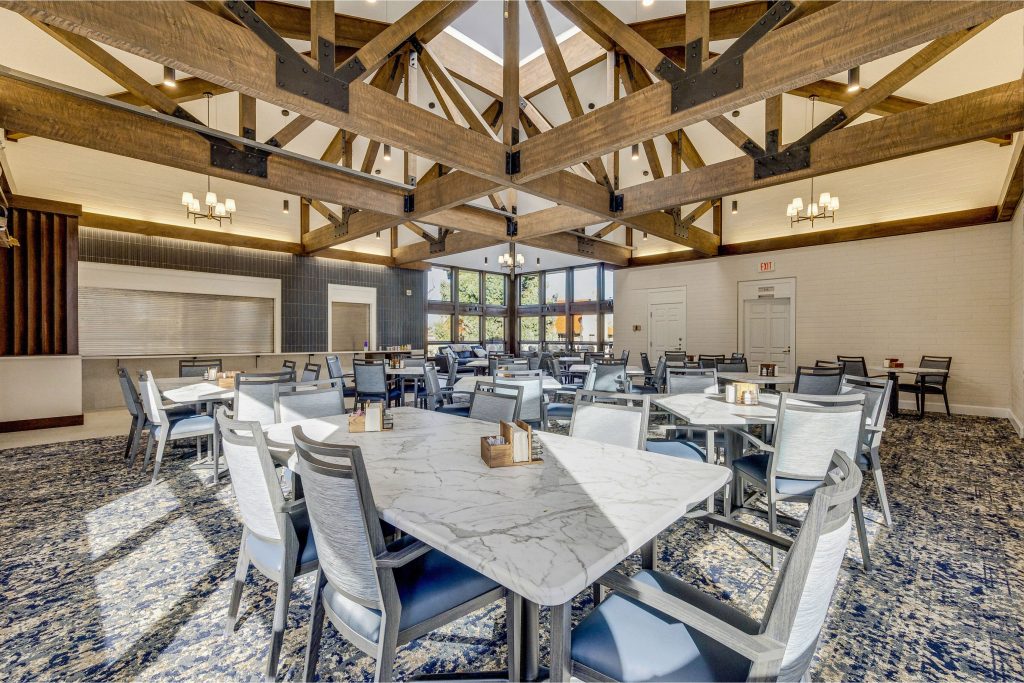
Renovating historic buildings requires a careful balance between modern functionality and historic preservation. When the Myron Stratton Home cafeteria in Colorado Springs needed an update, the goal wasn’t simply to modernize the space—it was to create a warm, welcoming environment where residents could gather while preserving the building’s architectural character.
Through thoughtful planning and craftsmanship, the Southern Mesa Commercial Division completed a renovation that improved comfort, functionality, and visual appeal while honoring the structure’s historic design. Southern Mesa provides commercial remodeling and renovation services in Colorado Springs, helping organizations update facilities while maintaining the character of their buildings.
This project demonstrates how historic building renovations can enhance the daily experience of residents while protecting the architectural elements that make a space meaningful.
Historic Cafeteria Renovation in Colorado Springs: Project Overview
The Myron Stratton Home cafeteria renovation focused on preserving historic architectural elements while modernizing the dining space for residents. Southern Mesa restored exposed timber framing, installed energy-efficient windows, redesigned the serving counter and coffee bar, and upgraded lighting and furnishings throughout the cafeteria.
These improvements helped transform the space into a brighter, more welcoming dining environment while maintaining the building’s historic character.
In this article, we’ll explore:
- The challenges of renovating older institutional buildings
- How historic timber framing was restored and preserved
- Key design upgrades that improved functionality and comfort
- How thoughtful renovations can strengthen community spaces
Renovating Older Institutional Buildings: Starting With Demolition
Many long-standing community buildings accumulate decades of design updates, repairs, and finish materials. The cafeteria at Myron Stratton Home was no exception.
Over time, the space had received multiple generations of finishes, including:
- Original carpeting throughout the dining area
- Several hundred square feet of quarry tile commonly used in commercial kitchen environments
- Outdated cabinetry and serving counters
While these materials once served the building well, they no longer created the welcoming dining environment residents deserved.
The renovation began with complete demolition of existing finishes in the main dining area, allowing the construction team to evaluate the building’s underlying structure and prepare the space for restoration.
Projects like this highlight how commercial remodeling projects often begin with careful demolition, allowing contractors to assess structural conditions before introducing modern upgrades.
Once demolition was complete, attention turned to one of the building’s most distinctive architectural elements: the exposed structural timber framing.
Restoring Historic Timber Framing
One of the most striking architectural features inside the Myron Stratton Home cafeteria is the system of exposed timber beams supporting the roof structure.
Over time, these beams had been coated with a dark brown stain that concealed much of the wood’s natural character. During the renovation process, Southern Mesa carefully sanded the beams to remove the existing finish.
As the sanding progressed, an unexpected discovery emerged.
Beneath the dark stain was an intentional antiqued wood design created by the original builders—a detail that had been hidden for decades.
Rather than covering the wood with a modern finish, the renovation team chose to preserve and highlight the original craftsmanship.
A new stain was carefully selected to:
- Reveal the natural grain of the wood
- Highlight the original antiquing technique
- Maintain the historic authenticity of the building
Additional custom staining was applied to surrounding millwork to create visual harmony with the cabinetry and finishes introduced during the renovation.
This approach allowed the renovation to celebrate the building’s history rather than erase it.
Window Replacement: Improving Efficiency While Maintaining Historic Character
Older windows can present several challenges in aging facilities, including:
- Poor energy efficiency
- Draft issues and temperature inconsistencies
- Aging materials that require frequent maintenance
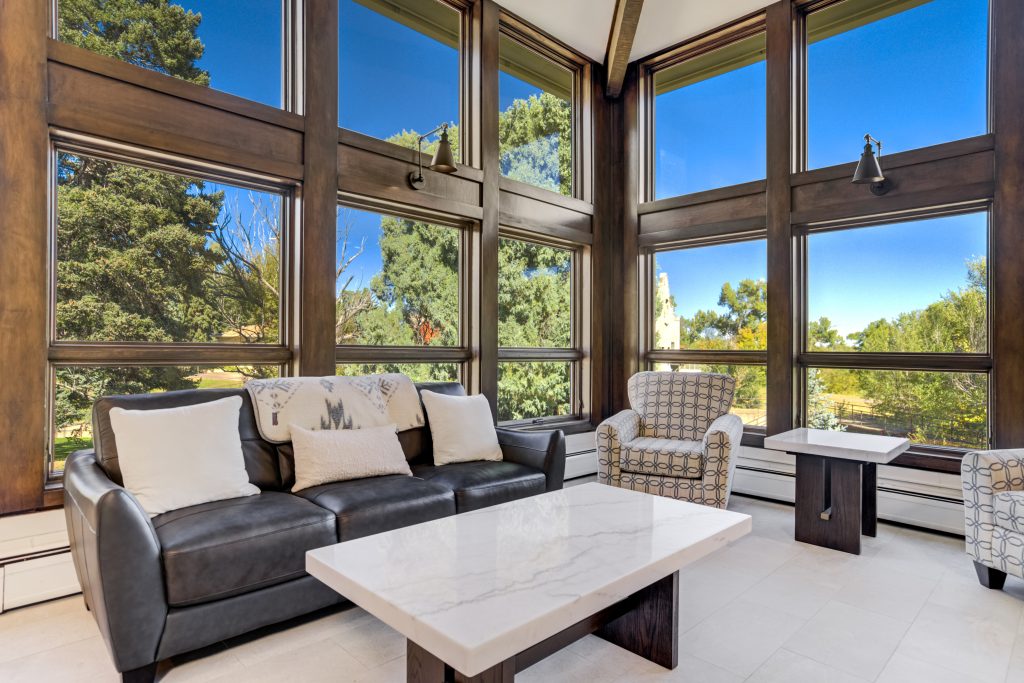
As part of the renovation, all windows in the cafeteria were replaced with high-performance Pella metal-clad window units.
These windows were selected to improve energy efficiency while maintaining the exterior appearance of the building.
Key features included:
- Exterior cladding finished to match the existing building envelope
- Interior wood trim stained to complement the restored millwork palette
- Improved insulation and thermal performance
This upgrade improved interior comfort while maintaining the architectural integrity of the structure.
Redesigning the Serving Counter and Coffee Bar
With outdated cabinetry and serving counters removed, the renovation created an opportunity to rethink how the cafeteria functions for residents and staff.
The new design introduced two key focal points:
- A redesigned main serving counter
- A dedicated coffee bar area
Both features incorporate custom walnut cabinetry stained by Southern Mesa to complement the restored timber framing.
Quartz countertops were installed using concealed brackets to create a subtle floating appearance.
Additional features include:
- Full-height backsplashes
- Accent tile walls
- Commercial-grade epoxy grout for durability
- Walnut slat wall accents and integrated cubbies
These elements help create a dining environment that feels modern while still reflecting the building’s historic architecture.
Lighting Upgrades That Transformed the Dining Experience
Lighting plays an important role in shaping how a space feels—especially in environments designed for gathering and dining.
The original cafeteria relied heavily on recessed can lighting and fluorescent fixtures, which created a functional but somewhat sterile atmosphere.
The renovation introduced a completely updated lighting plan, including:
- Removal of outdated recessed lighting
- Installation of modern pendant fixtures and chandeliers
- Replacement of fluorescent fixtures with energy-efficient LED systems
- LED strip and under-cabinet lighting for serving areas
These improvements created a layered lighting design that enhances both visibility and ambiance.
The result is a cafeteria that feels brighter, warmer, and more inviting for residents and staff.
Furniture and Finishes: Refreshing the Entire Environment
Beyond the architectural upgrades, the renovation also included a full refresh of furniture and décor throughout the cafeteria.
All existing furniture was donated, allowing the facility to introduce a completely new seating package designed to complement the updated finishes and lighting.
The new furnishings were selected to work cohesively with the natural wood elements, modern cabinetry, and improved lighting design.
These updates helped transform the cafeteria from a purely functional dining hall into a comfortable social space where residents can relax and connect.
The Result: A Space Designed for Community
The ultimate goal of the Myron Stratton Home cafeteria renovation was to create a space that encourages residents to gather, share meals, and enjoy time together.
Following completion of the project, leadership at Myron Stratton Home reported a noticeable increase in resident satisfaction and engagement within the cafeteria space.
When environments feel comfortable and welcoming, people naturally spend more time connecting—and that was the central vision behind this renovation.
Commercial Renovation and Historic Restoration in Colorado Springs
Projects like the Myron Stratton Home cafeteria renovation reflect the type of commercial renovation and historic restoration work Southern Mesa performs for organizations throughout Colorado Springs and the surrounding communities.
Commercial renovation projects often involve updating older facilities while preserving the character and structural integrity of the building. This requires careful coordination between design planning, structural assessment, and skilled craftsmanship.
Southern Mesa’s Commercial Division works with organizations across Colorado Springs to complete projects such as:
- Historic building renovations
- Institutional facility upgrades
- Commercial interior remodels
- Community facility improvements
- Structural and architectural restoration
By combining modern construction practices with respect for existing architecture, the team helps organizations improve their facilities while maintaining the character that makes those spaces meaningful.
If you’re considering a commercial renovation or historic building update in Colorado Springs, Southern Mesa can help guide the planning, design, and construction process.
Frequently Asked Questions About Historic Commercial Renovations
Historic renovation projects often involve working around existing structural elements, outdated materials, and preservation requirements. Contractors must balance modernization with protecting architectural features that contribute to the building’s historical significance.
Preserving original timber framing helps maintain the building’s historic integrity and highlights the craftsmanship of the original construction. These elements often become focal design features that give renovated spaces unique character.
Many institutional cafeterias benefit from upgrades such as improved lighting design, modern serving areas, updated cabinetry, durable countertops, and new furniture layouts. These improvements help create environments that feel welcoming and encourage social interaction.
Modern window systems can significantly improve energy efficiency and indoor comfort while maintaining the building’s exterior appearance. High-performance windows reduce drafts, improve insulation, and help lower long-term maintenance needs.
Commercial renovations in Colorado Springs often require careful planning around building codes, accessibility improvements, energy performance standards, and preserving architectural elements when working with historic structures.